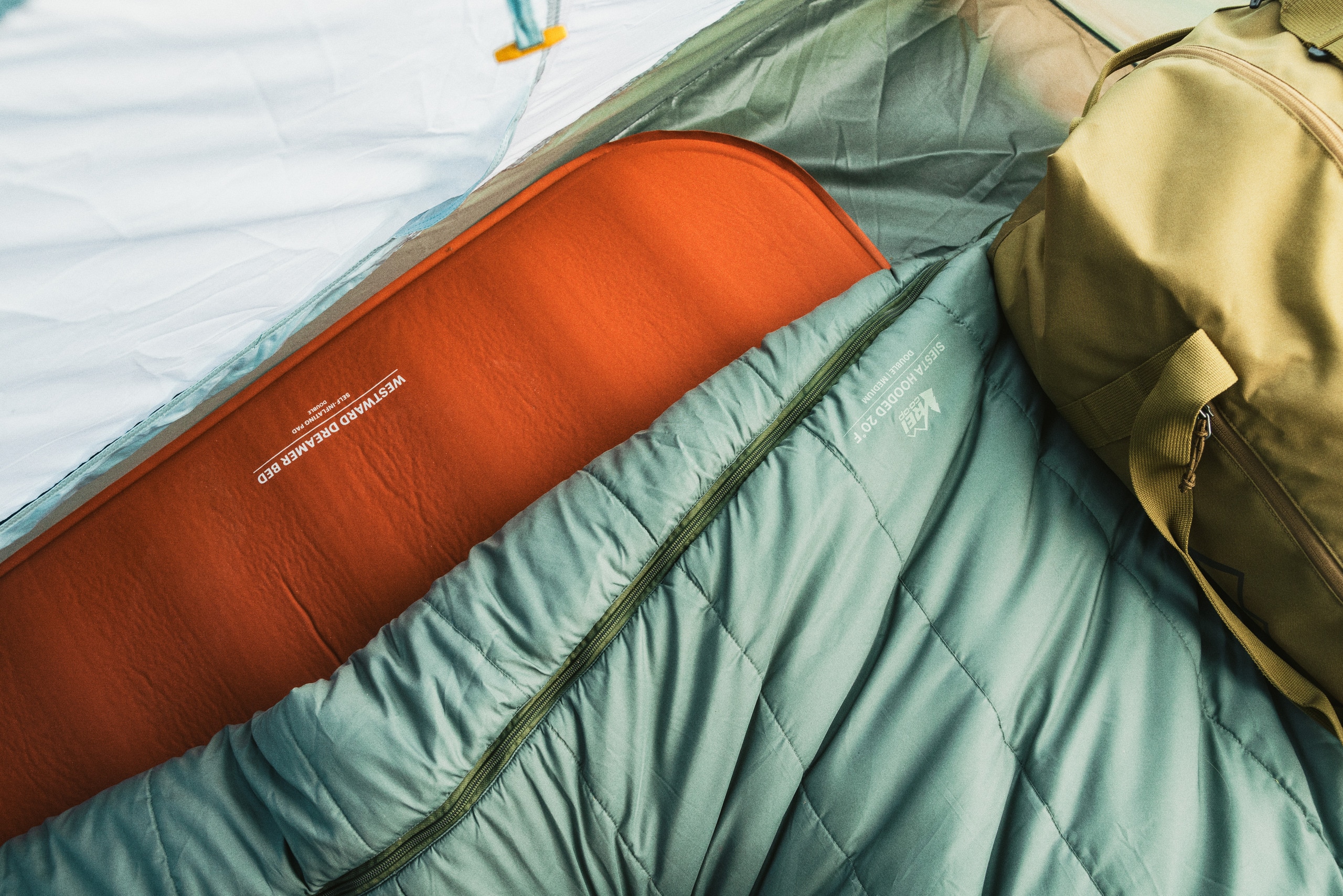
We’ve come a long way from the days when campers laid out bedrolls on pine boughs. The sleeping pads on shelves today are thick, cushy, warm and downright palatial compared to the mats of yore. Frankly, many are nicer than what college kids sleep on.
And when your vehicle does the heavy lifting, almost any sleeping pad is yours for the taking since weight won't be a big factor. You simply need to decide what type of pad you want, then factor in personal preferences like dimensions, plushness and price. Because there are so many great pads to choose from, we asked our REI Co-op Member testers to sample top-rated pads at dispersed and designated campsites across the country. They rated each one based on comfort, weight, warmth, packed size, durability and even how noisy (or not) the fabric is. These are the five that performed best.
Test Results
For quick recommendations, check out the results of our round-robin here, or scroll down for in-depth reviews.
- REI Co-op Westward Dreamer Self-Inflating Bed [score: 95/100] - Editors' Choice Award Winner
- Exped MegaMat Sleeping Pad [score: 94/100]
- REI Co-op Kindercamp Sleeping Pad - Kids' [score: 93/100]
- Helinox Cot Max Convertible [score: 89/100]
- HEST Foamy Sleeping Pad [score: 85/100]
Jump to Buying Advice or How We Test.
Editor's note: We updated this story on June 26, 2026, to add two new sleeping pads: the REI Co-op Westward Dreamer Self-Inflating Bed and HEST Foamy Sleeping Pad.
Test Results at a Glance
Sleeping Pad | Type | R-value | Best for | Score (out of 100) |
|---|---|---|---|---|
Self-inflating | 6.7 | Glampers, extra comfort, cold conditions | 95 | |
Self-inflating | 8.1 | Camping on rugged terrain, side sleepers, comfort-conscious campers | 94 | |
Self-inflating | 4.5 | Growing kids, shoulder-season and summer camping | 93 | |
Cot | None | Cot sleepers, campers with achy or sensitive joints | 89 | |
Memory foam | 8.8 | Side sleepers, campers who need extra cushion to support joints | 85 |


![Westward Dreamer Self-Inflating Bed [Air valve]](/media/878b4ec5-1738-4ad6-a550-2999790eeba8/?size=440)

REI Co-op Westward Dreamer Self-Inflating Bed
Score 95
Pad type Self-inflating
Insulation Open-cell foam
R-value 6.7
Dimensions 76 x 30 x 4 in. (Long X-Wide), 76 x 25 x 4 in. (Long Wide)
Weight 5 lbs. 11 oz. (Long X-Wide), 4 lbs. 9 oz. (Long Wide)
Best for Glampers, extra comfort, cold conditions
Living up to its namesake, the Westward Dreamer Self-Inflating Bed from REI Co-op receives high marks for comfort-forward features that make ground sleeping easy. The more than 6-foot-long cushion boasts a thick foam interior and sits 4 inches off the ground, making it feel more like your bed at home than a sleeping pad. “[It] was nice and thick,” says Kim H., our tester in Florida. “I didn’t feel any of the rocks or tree roots under me.”
Other self-inflating pads sometimes squeak as the air and insulation shift under weight and movement, and this is especially true if you’re an active sleeper. But our well-rested testers say this pad stayed silent all night.
“This is an incredibly quiet sleeping pad,” says Brooke B., our tester in Washington. “The noise of my turning or getting up was entirely from my sleeping bag. It was so nice to not have the sound of crunching underneath me at every movement.” Kim, who said she moved around quite a bit during the night, agreed that the Westward was quiet enough not to wake her friend as other sleeping pads have before.
Testers also report that the pad felt sturdy and durable, thanks to a 75-denier recycled polyester bottom that resists punctures from rocks, twigs and other natural debris. "I felt like I could move around on it without fear of it popping or tearing,” Brooke says.
With a 6.7 R-value, the Westward Dreamer can keep campers toasty even in extremely cold weather. The tradeoff is that some testers reported feeling warm during their late-spring trips. If you’re camping in warm weather or sleep hot, pair this pad with a lighter bag or quilt.
Also worth considering: The Westward Dreamer only comes in long sizes and is comparable to the length of a twin mattress, making it a snug fit in smaller tents. At about 4.5 pounds for the long-wide option, it’s a heavy carry if your vehicle is a long way from the campsite. One of our testers also reported needing to manually blow up most of the pad because it didn’t self-inflate enough.
But if it’s sound sleep you're after, the Dreamer is worth the extra heft and oxygen. Buy here.
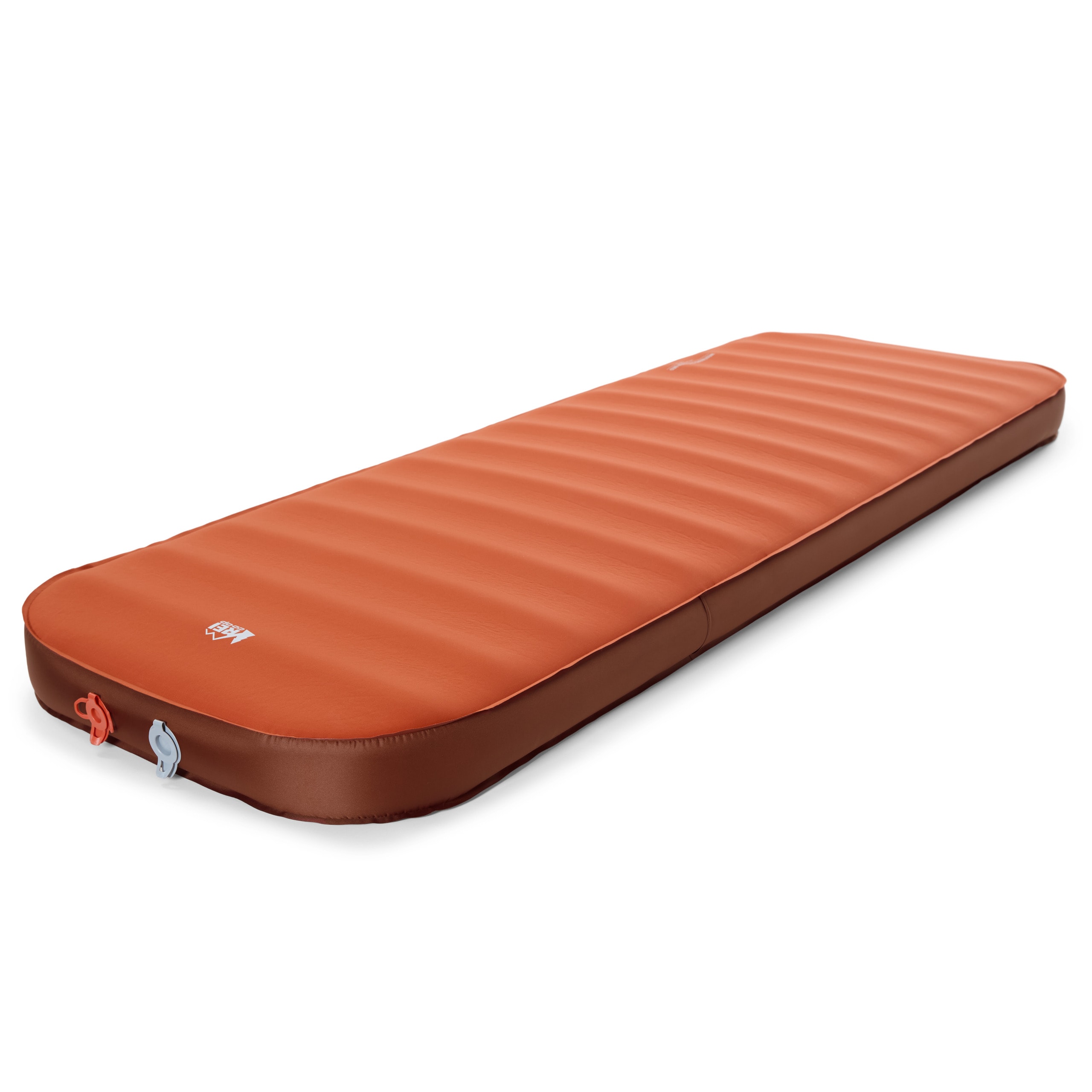
Bottom Line: A combination of thick padding, generous length and quiet fabric makes the REI Co-op Westward Dreamer Self-Inflating Bed a top pick for any camping (or glamping) adventure.
Testing Stats:
- Testing states: Florida and Washington
- Best testing story: “I just loved it,” says Kim. “It checked all the boxes for our car-camping excursions.”
![MegaMat Sleeping Pad [Medium Wide]](/media/bc65ee2d-e863-4cb2-b7b4-5e26316522e0/?size=440)
![MegaMat Sleeping Pad [Long X-Wide]](/media/f4e6dfd5-954c-4849-b34d-0fc32ea91e92/?size=440)


Exped MegaMat Sleeping Pad
Score 94
Versions Medium wide and long extra-wide
Pad type Self-inflating
Insulation Open-cell foam
R-value 8.1
Dimensions 72.1 x 25.6 x 4 in. (regular wide), 77.6 x 30.3 x 4 in. (long extra-wide)
Weight 4 lbs. 9 oz. (regular wide), 5 lbs. 11.7 oz. (long extra-wide)
Best for Camping on rugged terrain, side sleepers, comfort-conscious campers
Our testing samples of this mattress have seen a lot—we put them through the ringer to test the pad's ability to stand up to adventures that require hardier gear. We've thrown down on dirt and granite, to be sure, but also desert floors, truck beds and even a gravel parking lot. The pad was even included in a bounce-house-style melee among overeager testers confined to a tent during a Colorado squall that rendered other pads in need of repairs. And after all was said and done, the venerable MegaMat from Exped is no worse for the wear.
The MegaMat has a laminated top and bottom, making it far more durable than most inflatable pads. The 75-denier polyester bottom layer easily shrugs off dirt and other debris should you forgo the tent like one tester did on a rough-and-tumble night outside Moab, Utah. "There were cactuses everywhere, but my pad escaped unscathed," she reports. One of our testers who spent two nights at Washington state park declared it by far the most comfortable sleeping pad she's ever used. "This thing is nice enough to use for house guests. It is wide enough to sleep in my normal position (no arms hanging off!). It's easy to adjust the firmness. Feels like a mattress, not a sleeping pad," she said.
Of course, all that armor and comfort does come with a size penalty; the MegaMat packs down to the size of a bag of doggie kibble (2 feet and change by 8 inches for the medium wide, or nearly double the size of the packed-up NEMO Roamer). Still, "considering the sheer size of this product, I think that the packed size is very reasonable," says one of our testers.
Still, the MegaMat is light for its size. It weighs less than 5 pounds—awesome for campers who might schlep it onto a raft, lift it overhead into a roof-top tent or haul it in and out of the car every day on longer road trips. Credit its horizontal air chambers for shaving the ounces without affecting comfort—the MegaMat is still nearly 4 inches thick. "I'm a side sleeper, and this is the first pad that doesn't make me wake up with a bruised hip," one tester wrote on her feedback form. Buy here.
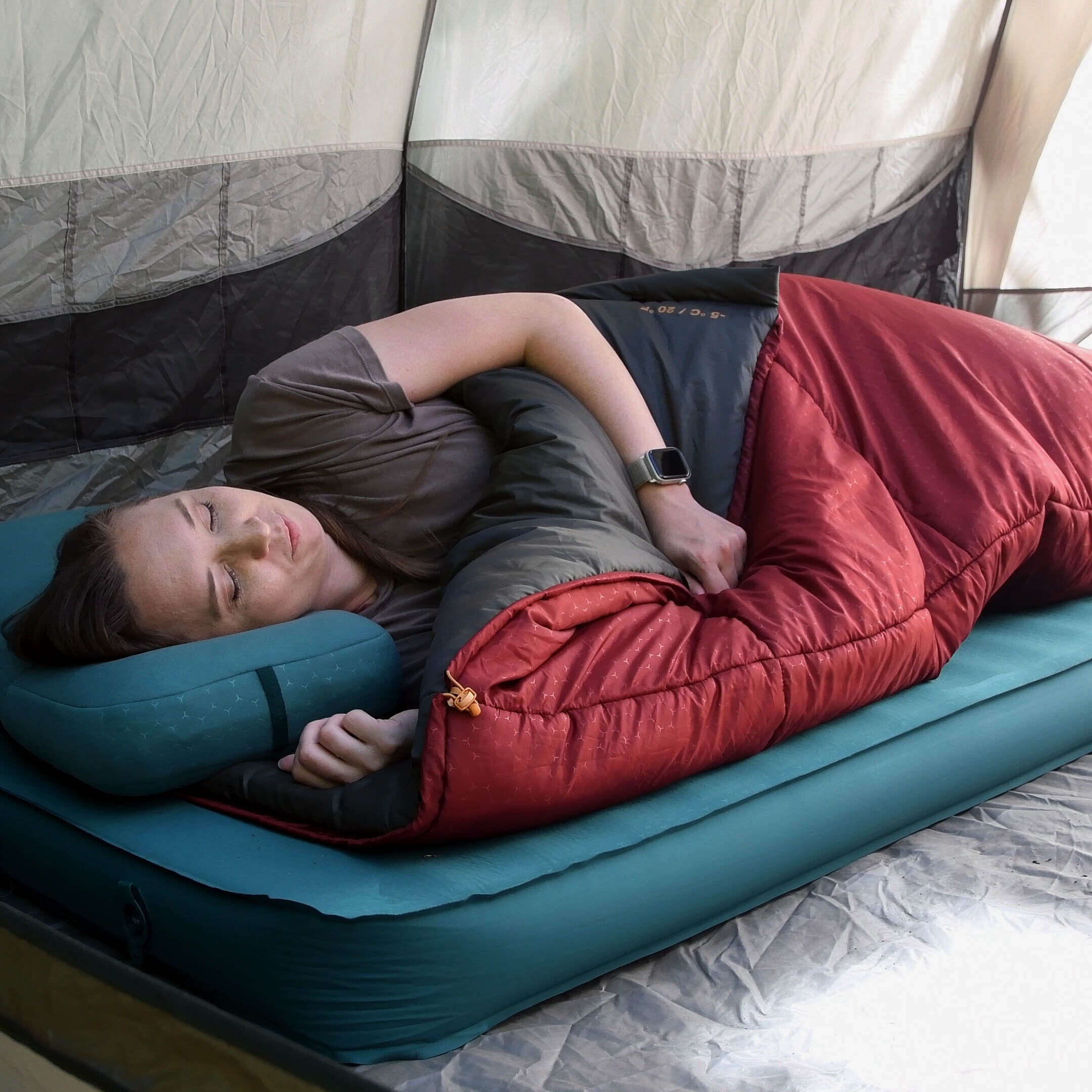
Bottom Line: If you want to hit the dirt for an adventure without hindering your beauty sleep, grab the mega-hardy and ultra comfy Exped MegaMat.
Testing Stats:
- Testing states: California, Colorado, Massachusetts, Michigan, Nevada, Oregon, Pennsylvania, Utah, Washington and Wyoming
- Best testing story: Our Utah crew rolled into Moab on a busy holiday without reservations or ideas as to where to set up a dispersed camp. After aimlessly cruising Bureau of Land Management wilderness after dark, the group called it. "It was after midnight and we were exhausted, so we pulled over on the side of the road and threw our stuff into the dirt," says our tester. "I got a good night's sleep on the MegaMat, but I was less than thrilled in the morning when I awoke to a shrub in my face on one side and a cow on the other."

![Kindercamp Sleeping Pad - Kids' [3/4 view]](/media/33878a54-7af4-4e17-bb21-4af710c4b904/?size=440)
![Kindercamp Sleeping Pad - Kids' [Air valve]](/media/be5988df-4aa7-4a17-903d-c788378379a1/?size=440)
![Kindercamp Sleeping Pad - Kids' [Air valve]](/media/7e0a3cb0-29ac-486e-9561-3aaf3d7706b1/?size=440)
![Kindercamp Sleeping Pad - Kids' [Stuff sack (32oz bottle not included)]](/media/e25dd122-99a5-4669-b8e6-df0a2b7e3a24/?size=440)
REI Co-op Kindercamp Sleeping Pad - Kids'
Score 93
Pad type Self-inflating
Insulation Open-cell foam
R-value 4.5
Dimensions 60 x 20 x 1.5 in.
Weight 1 lb. 13 oz.
Best for Growing kids, shoulder-season and summer camping
Teach 'em young by creating a cozy tent experience that begins with the Kindercamp sleeping pad from REI Co-op. Kids don't need as much material or surface area as adults, so the Kindercamp sticks to the essentials: a 60-inch length that's long enough for big kids and a 20-inch width that is downright capacious for the littlest of littles (and can fit a parent in a pinch). "Our daughter has loved using it," said our tester in Washington state, whose 3-year-old slept well on it. "It is small, easy to use, provides great warmth, and great size for little ones." Bonus: Inflation is easy. "Setup and takedown are the fastest of any pad I've ever used," says another tester after a night near the base of Oregon's Mount Bachelor.
The Kindercamp really hits the high notes when it comes to comfort. At a plush 1.5 inches, there's plenty of cushion to keep young one's shoulders off the ground. Warmth is also noticeable with an R-value of 4.5. This means that the Kindercamp should keep your babies toasty during shoulder season and summer.
With all this cushion, it isn't the lightest or the smallest pad out there and therefore won't be your first choice for backpacking. (It packs down to the size of an ultralight one-person tent). But, we feel confident the kids will love it. One camper's toddler did: "My daughter was so excited to show off her sleeping pad to her friend." Buy here.
Bottom Line: Little and big kids alike love the easy inflation, cozy feel and solid durability of the REI Co-op Kindercamp.
Testing Stats:
- Testing states: California, Oregon, Washington
- Best testing story: "Our toddler dragged this pad all over camp—including a moment when it got too close to the fire—and it still looks good," says our California-based dad. "Three cheers for kid testing."

![Cot Max Convertible [Side view (Black)]](/media/9fa98b04-91aa-44e1-a8df-6e0331bfb569/?size=440)


Helinox Cot Max Convertible
Score 89
Pad type Cot
Insulation None
R-value None
Dimensions 82.5 x 29.5 x 6.5 in.
Weight 6 lbs.
Best for Cot sleepers, campers with achy or sensitive joints
Get off the ground with the Helinox Cot Max Convertible. The benefits of a cot like this are many: For starters, its canvas trampoline-style top cradles your joints and curves more uniformly than a traditional sleeping pad. It also has significant ground clearance (more than 6 inches), which makes it easier to get in and out of and conserves storage space in the tent (you can stuff your belongings underneath it). You can depend on the cot's recycled polyester ripstop fabric to resist tears and, unlike with the self-inflating options on this list, you don't have to worry about a hole taking the wind out of your weekend plans.
This one may be obvious, but another big perk is that you don't have to waste any breath inflating it. The downside is that the Cot Max Convertible won't keep you as warm as an insulated pad, and nailing the setup takes a few practice rounds. Like any new item of gear, you should practice setting it up at home before taking it outside. Buy here.
Bottom Line: Campers with achy joints and those who have difficulty lowering onto a traditional sleeping pad can heave a sigh of relief: Getting in and out of bed is easier with the Cot Max Convertible from Helinox, which sits 6 inches off the ground.


HEST Foamy Sleeping Pad
Score 85
Pad type Memory foam
Insulation Open-cell foam
R-value 8.8
Dimensions 64 x 25 x 3.9 in. (Short), 78 x 25 x 3.9 in. (Regular), 78 x 30 x 3.9 in. (Regular Wide)
Weight 9 lbs. 8 oz.(Short), 11 lbs. (Regular), 13 lbs. (Regular Wide)
Best for Side sleepers, campers who need extra cushion to support joints
There’s little worse than tossing and turning in your tent because you can’t get comfortable. For campers prone to sleepless nights, consider the Foamy Sleeping Pad from HEST. Made with two layers of memory foam, this pad contours to your body to help alleviate common pain points at the hips and shoulders (looking at you, side sleepers) for a slumber that feels downright dreamy. It’s also 4 inches thick, providing ample cushion from hard ground.
“I would say this pad felt similar to my mattress at home,” says Taylor G., our tester in California. “The foam was layered in a way that gave it structure but also was soft and comfortable.”
Another perk of foam: Unlike the self-inflating options on this list, there’s no chance of punctures from sharp rocks and twigs. It’s also quieter than other materials, so your tentmates can enjoy a restful night as well.
You can add a fitted sheet (sold separately) to keep the top of your pad clean and provide an extra layer of softness and warmth—though with an R-value of 8.8, this pad will keep most campers plenty insulated even in the coldest conditions. Waterproof fabric on the bottom keeps it dry on wet days.
A pad this nice comes with a higher price tag, which testers note feels a little steep for a camping pad. Another drawback is the bulk: Taylor found it challenging to compress the pad when packing it. “I struggled to tighten the straps," she says.
Davi G., our tester in Minnesota, also notes that the pad is bulky, but that the attached handle makes short carries easy.
For selective sleepers, the extra load is a small tradeoff. “I think the comfort of it made the weight worth it,” Taylor says. Buy here.
Bottom Line: The HEST Foamy Sleeping Pad makes happy campers of side sleepers and those with achy joints.
Testing Stats:
- Testing states: California and Minnesota
- Best testing story: “We took my newly rescued dog camping for the first time. He LOVED the pad. If the pad was larger, he would have slept on the pad with me,” says Taylor.
Shop All Sleeping Pads for Camping
Buying Advice
If you’re looking for a car-camping sleeping pad, your motorized packhorse is doing the heavy lifting, so just pick the warmest, cushiest, most durable pad you can afford, taking into account your space. Your unfurled sleeping pad needs to fit inside your tent, and your packed-up sleeping pad needs to fit in your vehicle and wherever you’d like to store it when not in use.
Types of Sleeping Pads
You have three main sleeping-pad styles to choose from: air pads, self-inflating foam pads and closed-cell foam pads.
Most car-camping sleeping pads are of the self-inflating foam variety. That means they have open-cell foam insulation for warmth and padding, plus air inflation to enhance cushioning. To inflate one, you open a valve to let the outside air pressure plump up the pad. (This typically takes 5 to 10 minutes.) To get it fully inflated to your liking, though, you’ll have to blow a few lungfuls in, too. (Some pads like the Hest Sleep System come with a pump.)
Related reading: Closed-Cell vs. Self-Inflating Pads: Which Is Right For You?
The warmth of self-inflating pads comes from the open-cell foam inside. Compared to air pads, they are heavier and bulkier to pack, and because they’re inflated, you need to take care not to puncture them and should carry a field-repair patch kit on your trips.
Pad R-Values
R-value measures a pad’s resistance to heat flowing through it (hence the “R”). Higher R-values are warmer. Below are rough guidelines about temperature conditions for different R-value ranges:
- R-value less than 2.0: Warm-weather pads
- R-value 2.0 to 3.9: Cool-weather pads
- R-value 4.0 to 5.4: Cold-weather pads
- R-value 5.5 and greater: Extreme-cold-weather pads
How We Test
We sent a slew of top-selling and recently launched sleeping pads to REI Co-op Member testers across the country and asked them to rate them based on comfort, weight, warmth, packed size, durability and more. Our testers schlepped these pads to designated campsites in Florida, a dispersed spot in California's Anza-Borrego Desert State Park and a walk-in site in Washington. They braved lows in the 30s and highs in the 70s, and they slept on terrain ranging from grassy fields to desert canyons. The five pads on this list ranked highest across all or most categories.